
What Do I Need To Get Started?
Someone recently asked what is the basic equipment they need to get started processing their own meat. Here is my answer.
HOMESTEADINGBUTCHERY
Kyle Truman
4/20/20264 min read
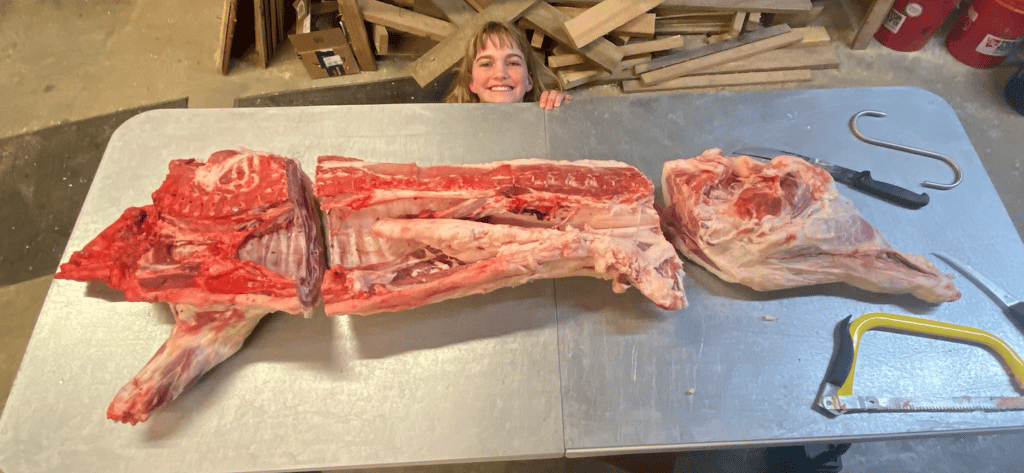
I had the privilege of being invited to setup a table and teach a class at the Heritage Association's annual plow day event this past weekend. The topic of “Home Butchery Education” was assigned to me and I gladly accepted the opportunity to share what I know with those who were interested in learning more.
There were about 25 in attendance and I began the presentation by asking a few folks to tell me why they came to this class. The hands went up and I quickly learned much about my students. I then proceeded to tell them my story of how I became interested in home butchery and how my skills have developed over the past seven years and then let the majority of the class be Q&A so that I could meet the needs of those in attendance effectively.
One of my students was a thoughtful young man who was very attentive and eager to begin the work. I had connected with him earlier in the day at my table and he told me that he came to the event specifically for my class. During the Q&A he asked me to share what equipment I would recommend as necessary for getting started in the work.
This is my answer.
First, you need a good gun. I shoot all my pigs with my pop-pop’s first gun that he was given over 80 years ago. I inherited his .22 when he died in 2014 and I’ve killed at least a hundred pigs with it by now. I have shot cows with it before but now prefer something larger for cattle.
Besides the gun for the kill, the most important tool is definitely a good knife. I’ve been using the Victorinox 6-inch semi flexible boning knife as a good all purpose knife that gets the job done for many years.
After you shoot and stick your animal I recommend using a hoist and gambrel that you can attach to your tow hitch like this one or a tripod hoist like this one that I’ve used for several years now
A good bone saw is also needed. I started out with an old wood-cutting hand saw on my first few processing jobs on my homestead. I have also used a hack saw. A metal cutting blade can get the job done but I would recommend a wood blade. If you have the budget available I would recommend a good hand held bone saw like this one.
You’ll also need some meat lugs to help you store and organize your meat. I’ve used these meat lugs from LEM for years. Before I built my walk-in cooler I would cut the slaughtered animal into primals (large portions of meat like a hind quarter, front shoulder or loin section), place each primal in a meat lug and then put it in the fridge to chill for processing. I also fill up these lugs with trimmings for my grinder. They are an indispensable part of home butchery work.
Cutting boards are also essential. I’ve had several. I recommend a large one like this one.
We are almost done! You are almost ready to slaughter and process your own beast but you need one more big item and a couple supplies to go with it.
You need a grinder! Even if you prefer cuts and roasts you will still have trimmings that aren’t good for anything except being ground up. I have the giant LEM #32 1.5 BigBite Grinder but I would not recommend starting with this. I would also not recommend purchasing any meat grinder under $300. The smaller, less expensive grinders will make you lose your mind. You have to cut the pieces so small so that they can pass through the wimpy grinder that it becomes more work than most people want to do. These less expensive grinders also don’t usually last long.
If you are serious about processing your own meat I recommend a grinder in the $400-$600 range such as the MEAT! .75hp #12 Pro-Grade Meat Grinder or the Vevor 1.5hhp #32 Grinder.
Regarding packaging you can get a chamber sealer like this Vevor machine that I’ve been using for years but I would recommend save the money and just using zip-lock bags for now. I’ve placed many a steak, pork chop and roast in a zip-lock bag and been so happy when it is time to sit down and feast on my harvest. I’ve also packaged ground meat in zip-lock bags but I would recommend getting some of these 1lb meat chub bags that can go over a stuffing tube that most meat grinders have. They make unmarked bags, beef bags, pork and sausage bags, wild game bags and just about any kind of bag you’d like. If you go for these 1lb bags you will also need a tape sealer like this one.
If you want some additional education I'd be happy to teach you myself. You can contact me by filling out this form. I also recommend Adam Danforth's Beef Butchery Book and his other book on butchering poultry, rabbits, lamb, goat and pork. For quick good help on youtube I highly recommend the work of the Bearded Butchers.
Some of this gear is certainly essential, some of it is not. You have a budget and I recommend sticking to it. Do the research. Shop around. Consider your specific needs and priorities and do what is best for you. Start simple. Master a few things. Then expand as you have the opportunity.
Which piece of equipment are you the most excited about?
Is there any reason why you hesitate to get started in this work?
One final note: To help support our work and keep this education free, I’ve included links to the tools I use and trust. As an Amazon Associate, I earn a small commission from qualifying purchases at no extra cost to you. Thank you for supporting the mission here at Trumanology!